Nearly two thousand years ago, the city of Rome was loud, busy, and full of life. More than a million people lived there at the height of the Empire. Streets were narrow, markets were noisy, and the smell of bread, smoke, and animals filled the air. For Romans, daily life was a mix of work, family, religion, and public entertainment. A typical Roman day began early in the morning. Wealthy Romans often woke at dawn to greet their clients in a ritual known as the salutatio. In this daily social tradition, lower-status citizens visited their wealthy patron to pay respects and receive small gifts or support. This system of patronage, called clientela, helped maintain social order in Roman society.
Life in ancient Rome varied according to social standing within the empire. Patricians, at the pinnacle of the social hierarchy, were wealthy landowners who often controlled the political power of the empire. These wealthy families lived in homes called domus with lavish architectural features such as frescoes and mosaics, courtyards with fountains, and slaves to care for the household. Beneath the patricians, the next social class was the plebeians. Plebeians consisted of farmers, merchants, craftsmen, artisans, and laborers of various occupations. Most plebians lived in apartment style buildings called insulae. Insulae were prone to overcrowding and were not known for their structural integrity. Beneath the plebian class were the freedmen, former slaves who had been freed by their masters. The lowest class being that of a slave. Roman citizens had legal rights and protections that slaves and other noncitizens did not, such as the right to vote, own property, and hold political office. While the elite of society spent their days overseeing political matters, estate management, attending social events, and other leisure pursuits, the slave and laboring classes worked long, difficult hours.
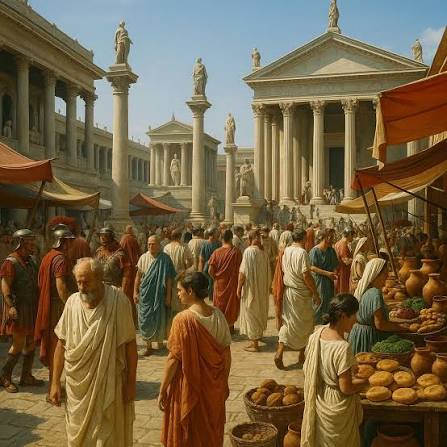
No matter one’s class, all living things must eat; however, depending upon one’s social class, what food was available could vary. The wealthy patricians of Roman society had access to luxury food items such as oysters, spices, and fruits from foreign lands, as well as the standard staples of bread, legumes, native fruits, nuts, cheese, yogurt, and meat (poultry, beef, lamb, peacock, dormice, fish, and other seafood, etc.). Patrician meals featured multiple courses, including imported goods alongside native foods, served with wine. Food for the lower classes was much simpler, according to what the person could afford. Bread and porridge/pottage (made with grains, legumes, and vegetables) were commonplace foods for the plebeian, freedmen, and slave classes. Location could also play a role in what foods were available. In cities and towns, food could be purchased from the local market, having been brought in from the rural farms and from trade with other countries. In the rural areas, self-sufficiency was a mandatory way of life for survival.
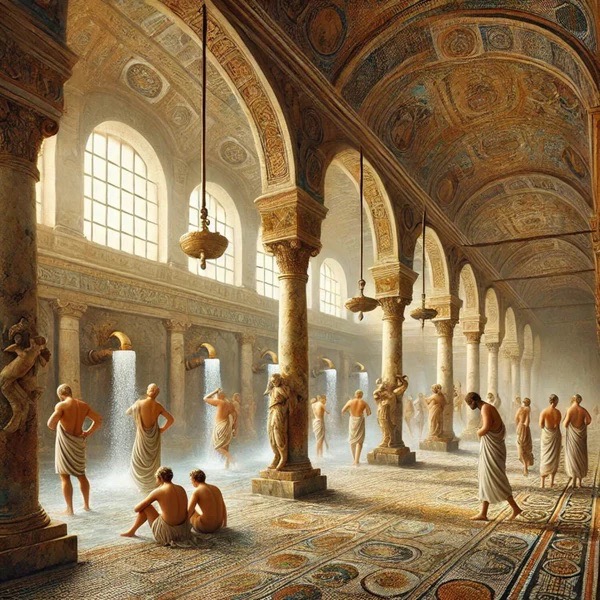
While working was a dominant element of life for most of the Roman Empire, so that one might eat and have shelter, play was also important. Leisure pursuits were widely available to most classes. Public baths were frequented not just for the sake of cleanliness, but also for a wide range of social interactions. Theatrical performances inspired by the ancient Greeks and current events drew crowds across social classes. Perhaps the most famous form of Roman entertainment was the gladiatorial games that were held in amphitheaters across the empire. Gladiators were slaves who were forced to fight, often to the death, for the amusement of the masses. A gladiator’s body was not their own and could be used and abused in any way that their master’s saw fit, including being prostituted out to the wealthy classes. These amusements were often used to keep the lower classes under control, appeasing them by providing bread and entertainment.
Religion was another important aspect of Roman life. Household rituals were performed regularly to appease the gods or to make a request for the benefit or protection of those who resided within. Sacrifices and petitions were made at temples and other holy sites across the empire. Religious festivals were held throughout the year to honor various deities, including Saturnalia (to honor the god Saturn), Lupercalia (to honor the god Lupercus), Vestalia (to honor the goddess Vesta), Floralia (to honor the goddess Flora), Consualia (to honor the god Consus), Parentalia (to honor the ancestors), Lemuria (to appease the spirits of the dead), Nonae Caprotinae (to ensure fertility), and so many more. These festivals were important social events for the communities in which they were held, binding lives together in shared belief and tradition regardless of class.
Despite the grandeur of Roman monuments and imperial power, daily life in Rome could also be difficult. The city was crowded, sanitation was poor, and social inequality was strong. Slavery was common, and many people lived in poverty. Yet Rome was also vibrant, innovative, and culturally rich. In many ways, Rome feels surprisingly modern. People rushed through busy streets, worried about politics, shared meals with friends, and searched for entertainment after a long day of work. Even today, the echoes of Roman life remain in our cities, laws, and language.
As the Romans themselves might say, Roma aeterna — Rome is eternal.
Bibliography
Matthews, Tim Cornell, and John. Atlas of the Roman World. New York: Facts on File, Inc., 1982.
Scullard, M. Cary and H.H. A History of Rome: Down To The Reign of Constantine. New York: St. Martin's Press, 1975.
Warrior, Valerie M. Roman Religion. Cambridge: Cambridge University Press, 2006.