The gastronomy of Ancient Rome was a unique blend of simplicity and luxury that denoted culinary ingenuity (and perhaps a bit of madness in the mix, very much like the emperors themselves). The diet of Ancient Rome, which stretched from the British Isles to the Persian Gulf, varied, but held some staple foods as part of its core cuisine. From the slave’s table to the extravagant banquets of emperors, food in Ancient Rome could be comforting and familiar or bizarre and wild. Pull up a chair and grab a plate to dig into the feast of what Ancient Romans ate!
In Rome, food was everywhere, but what you ate depended very much on who you were. In other words, dinner in Rome was not just about hunger. It was also about status. The wealthy patricians (upper class) of Roman society had access to the widest variety of foods. Food for the lower classes, such as the plebeian (laboring/artisan class), freedmen (those freed from slavery, such as gladiators), and slaves, was much simpler, either based on what they could afford or what their wealthier masters provided for them.
Cereals adorned every table; not to be confused with coco puffs or cornflakes, these were grains, a staple of Roman nutrition that yielded bread and gruels. Barley, wheat, oats, millet, or rye were the most common and could be made into flatbreads, loaves, or porridges (puls) that were either baked in ovens or prepared over stoves or fires. Wealthier members of Roman society had their slaves make their bread mixed with eggs, milk, or butter, allowing for a more luscious taste closer to cake. Common grains could be harvested across the realm, but more expensive grains like rice were imported from the Middle East and favored by Rome's elite.
Each corner of the Roman Empire had its own distinct form and flavor of dough, but no matter where anyone went, carbohydrates were essential. Gladiators did not look like Andy Whitfield with perfectly toned muscles, but were heavier and less defined, resembling strong men or construction workers. Their diet was not made up of chicken and rice, but instead heavy in carbohydrates such as sagina, barley, and bean stew to keep them in fighting form, as well as protected with a little more fat on their bodies than one might expect from a top combat athlete (think the Mountain from Game of Thrones).
Cheese (caseus) was a must-have, and like bread, appeared on every table and complemented meals, from breakfast (ientaculum) to lunch (prandium) to dinner (vesperna, or cena). Fresh cheese, as well as smoked, preserved, and aged cheese, were incredibly popular and served on the side or incorporated into dishes. Goat and sheep milk were the most common among the Mediterranean dwelling Romans, and in the north, cow’s milk became increasingly prevalent in Roman diets.
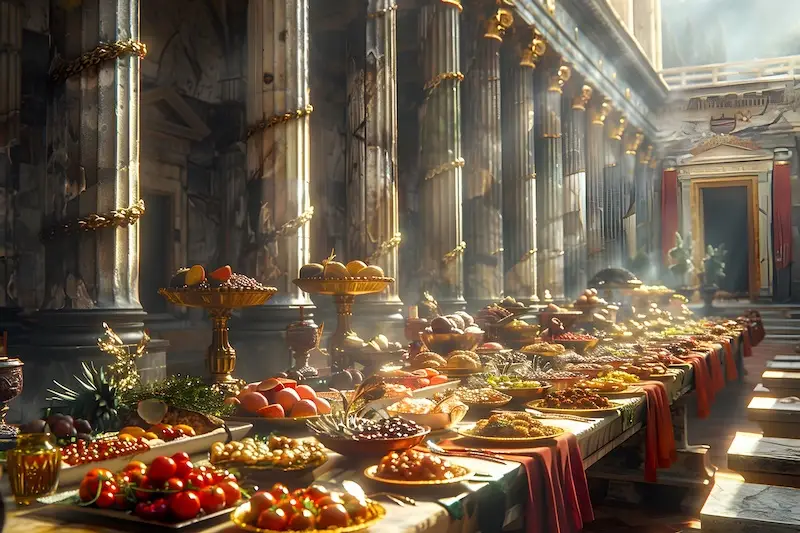
No Roman dining table was complete without an array of nuts, fruits, or vegetables to complement the meal. Grapes, pomegranates, peaches, pears, plums, figs, oranges, dates, cherries, and apples were the most common fruits, and could be made into juice (defrutum). Nuts such as walnuts, hazelnuts, chestnuts, and almonds were incredibly popular and could be eaten fresh or mixed with honey, fruit, or other foods to make a delicious snack or a complementary part of a dish.
Olives were practically the symbol of the ancient world and were used to produce the essentially important olive oil, which would be used in cooking and preservation, as well as in cleansing the body and making medicine. The most popular vegetables were legumes, such as lentils and beans, which were often used to make simple stews and soups. Cucumbers, celery, carrots, leeks, cabbage, onions, and other vegetables were often used in cooking or for snacking. Aside from being eaten raw, vegetables were often cooked, made into soups and stews, or roasted alongside more decadent dishes.
Meat was a luxury, so very little of the animal would go to waste in Ancient Rome, including its organs, blood, hooves, shells, claws, beaks, and even bones, which were consumed, either used in cooking, or applied in other ways, such as in medicine, rituals, or trade. Scraps of meat were cheaper and made into sausages, which were incredibly popular among the lower classes. Hunters and farmers had greater access to meat and a variety of game and livestock, while fishermen offered a range of seafood options. The most popular meats varied by region but included chicken, venison, veal, pork, lamb, rabbit, snails, octopus, mussels, shrimp, and other meats, as well as fish that could be roasted or cooked on the stovetop.
It was, however, the exotic meat that made the Romans an odd bird (pardon the pun), and was often served on elaborate plates. Roasted ostrich, poached parrot eggs with flamingo tongues, and giraffe steaks were only a few interesting dishes, but every part of an animal could be used, from its brain to its…unmentionables. Meat, fruits, and vegetables could be dried, cured, pickled, smoked, salted, or brined to preserve and extend their shelf life, which was vital for longevity and access throughout the year.
There was one ingredient, however, almost everyone used: garum. This famous Roman sauce was made from fermented fish, and yes, it smelled exactly like it sounds. Yet Romans absolutely loved it. They poured garum on vegetables, meat, eggs, and even fruit. It was basically the ketchup of the ancient world.
Desserts in ancient Rome consisted of honey, fruits, dairy (such as cheeses), flour, and nuts. Some ancient Roman desserts included libum (an ancient form of cheesecake often served during the festival of Liberalia to honor the god Liber Pater), globi(fried dough balls), placenta (a honey cake), dulcia (a fruit-based dessert), and frumenty (a sweet porridge). Desserts among the lower classes were simply made with the ingredients available, such as frumenty (a sweet porridge), in contrast to the more refined and exotic ingredients of the patrician class.
Salt, the heart of all cooking and backbone of Rome’s economy, was vital for the preservation of food but also for bringing out the intricate flavors. Spices (species) played an equally important role, helping to not only enhance meals but to show off wealth (the further away the spice’s origin, the grander the meal). Pepper, saffron, cinnamon, and ginger were highly coveted, while more regional seasonings, such as mustard, dill, and thyme, appeared more frequently. Beer was the most popular beverage to the north of the empire, while wine mixed with spices, honey, water, vinegar, or fruit juice was the most common drink across the Mediterranean.
While cuisine varied widely across the Empire, depending on geography and status, and often at the mercy of nature or war, food still brought Romans together despite these dramatic differences. Markets, bakeries, and street stalls filled Roman cities. Even people who could not afford large meals could buy hot food from small shops called thermopolia, which were something like ancient fast-food counters.
Examining Roman fare gives historians insight into the lives of the people who came before us (and challenges us to try some of their weird and wonderful dishes). So the next time you sit down for dinner, imagine the Roman version. If you were poor, you might be eating a bowl of puls with some cabbage. If you were rich, you might be reclining on a couch, eating stuffed dormice. Either way, you would probably be pouring garum on everything. Ultimately, some Roman habits, like loving good food and talking loudly at dinner, have not changed much in two thousand years. Tempora mutantur — but appetites rarely do.
References:
Brown, Madeline. “Grain, Pulses and Olives: An Attempt Toward a Quantitative Approach to Diet in Ancient Rome.” Journal of the Washington Academy of Sciences vol. 97, no. 1 (2011): pgs. 1–24.
Cartwright, Mark. “Food in the Roman World.” World History Encyclopedia. May 6th, 2014.
Evans, Edith. “Dining with the Ancients.” Archaeology vol. 43, no. 6 (1990): pgs. 54–61.
Young, Peter A. “In This Issue: A Taste of Roman.” Archaeology vol. 43, no. 6 (1990): pg. 2.