Imagine walking through the busy streets of ancient Rome. Vendors shout prices, senators hurry toward the Forum, and the smell of fresh bread drifts from nearby bakeries. But behind this lively city lies a quieter truth: much of Rome ran on the labor of enslaved people, known as servi. Without them, daily Roman life would have looked very different.
In fact, slavery was everywhere in the Roman world. Wealthy households might own dozens or even hundreds of enslaved workers. These servi cooked meals, cleaned homes, raised children, managed farms, and sometimes even educated their masters’ children. One might say the Roman household operated like a small company, except the employees didn’t exactly receive vacation days.
Romans referred to the head of the household as the dominus, meaning “master.” Under Roman law, the dominus held almost complete power over the enslaved people in his home. This power was part of the broader authority known as patria potestas, the legal control a male head of household had over his family and dependents. To a Roman, this system felt completely normal. To us, it raises some very uncomfortable questions.
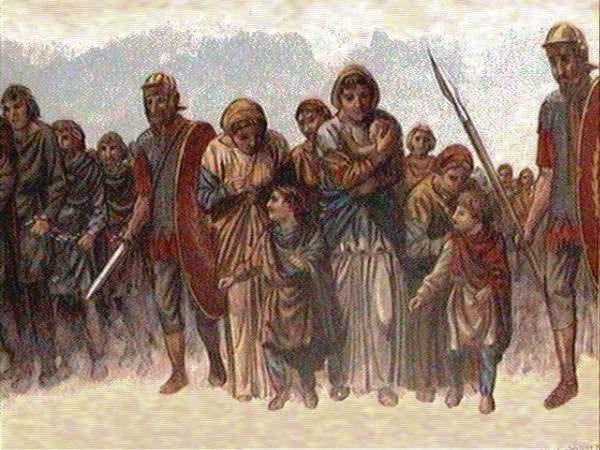
So where did these enslaved people come from? Many were prisoners captured during Rome’s constant wars. When the Roman army conquered a region, thousands of people might be taken and sold in slave markets. Others were born into slavery if their parents were enslaved. Some unlucky individuals were even sold into slavery because of debt or punishment for crimes. In short, Rome’s expanding empire constantly fed the system.
Now here’s something surprising: Roman slavery was not based on race the way slavery later developed in the Atlantic world. Enslaved people came from many different regions - Gaul, Greece, Syria, Africa, and beyond. A person’s status as a slave depended more on circumstance than on ethnicity. In other words, if history had gone differently, almost anyone might have found themselves wearing the label servus.
Life as a servus varied widely. Some people endured brutal labor in mines or agricultural estates called latifundia. These jobs were extremely harsh, and survival itself could be difficult. But others worked in urban homes as cooks, teachers, accountants, or secretaries. In some cases, educated Greek slaves were highly valued for their knowledge. Imagine being a Roman child whose math tutor was technically enslaved but also smarter than your entire household.
One unusual feature of Roman slavery was the possibility of freedom. Many enslaved people hoped for manumissio, the legal act of being freed. A master might free a loyal slave after many years of service, or a slave might even save money to buy their own freedom. Once freed, they became a libertus (freedman). Freedmen were not completely equal to free-born Romans, but they could work, own property, and build successful lives.
Despite these possibilities, we should not forget the basic reality: slavery was built on control and inequality. Millions of people lived their lives without freedom, and their labor helped build the Roman economy, cities, and infrastructure. Behind every grand Roman villa, marble temple, and triumphal procession were countless individuals whose names history rarely recorded. The Romans might have called them servi, but they were human beings with hopes, fears, and dreams, just like the people walking through Rome’s crowded streets today, two thousand years later.
As the Romans themselves might say, sic transit gloria mundi - “thus passes the glory of the world.” Even the greatest empires are built on the lives of ordinary people.