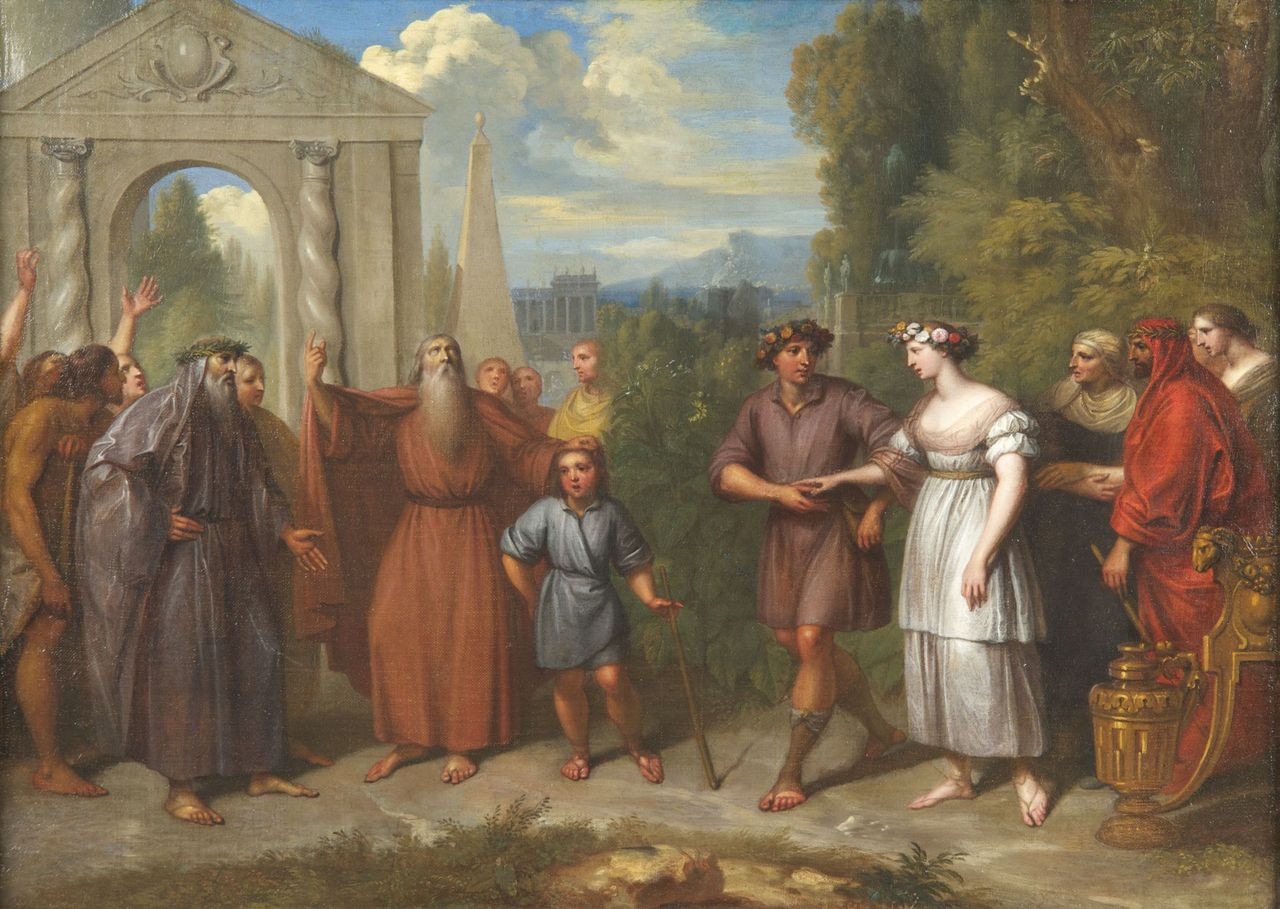
Imagine attending a wedding in ancient Rome. There are no white dresses, no wedding cakes, and no honeymoon photos. Instead, the ceremony is short and symbolic. The bride joins hands with the groom, they share a simple sacrifice, and the bride speaks the famous words: “Ubi tu Gaius, ego Gaia” — “Where you are Gaius, I am Gaia.”
But behind this poetic moment lies an important question: was Roman marriage about love, or was it mostly a legal arrangement?
In ancient Rome, marriage—matrimonium—was primarily a social and legal institution. Its main purpose was not romance but family continuity, inheritance, and political alliances. Roman families believed strongly in mos maiorum, the “custom of the ancestors,” which placed great importance on duty to family and society. Marriage helped maintain that tradition.
Most marriages were arranged by the families of the bride and groom. Fathers played the biggest role in deciding matches because they held patria potestas, the legal authority over their household. A marriage could strengthen family friendships, secure wealth, or improve social status. In elite Roman society, marriage was sometimes almost political.
Girls often married young, sometimes around fourteen. Men usually married later, often in their twenties or early thirties. Because marriages were arranged so early, many couples barely knew each other before the ceremony. Romantic love was not the foundation of most Roman marriages.
That does not mean love never existed. Roman writers often described affection between spouses. The poet Catullus wrote passionately about love, even if his poems often described complicated relationships. Tomb inscriptions also show evidence of deep emotional bonds. Some husbands praised their wives as “carissima coniunx”—“most beloved spouse.”
However, Roman marriage remained deeply tied to law and property. One important element was the dowry, known as dos. The bride’s family gave money, property, or goods to the groom to help support the new household. If the couple divorced, the dowry could sometimes be returned.
There were also different types of Roman marriage. In early Rome, one form called cum manu placed the wife legally under the authority of her husband, almost like a daughter in his family. Over time, however, another form called sine manu became more common. In this arrangement, the wife remained legally connected to her father’s family instead of her husband’s.
This change gave women slightly more independence. A woman in a sine manu marriage could still own property and maintain financial ties to her original family. While Roman society was still strongly patriarchal, this system allowed some elite women to gain surprising influence.
Divorce was also easier in Rome than in many later societies. A marriage could end simply if either partner decided to leave. The phrase “tuas res tibi habeto”—“keep your things for yourself”—was sometimes used to mark the end of a marriage. Although divorce could be socially awkward, it was legally straightforward.
Despite the legal nature of Roman marriage, emotional bonds sometimes grew over time. Living together, raising children, and managing a household could turn an arranged partnership into a real companionship. Roman writers occasionally celebrated marriages built on concordia—harmony between husband and wife.
In the end, Roman marriage was both practical and personal. It began as a contract shaped by law, family interests, and social expectations. Yet within that framework, real affection could still develop.
So was Roman marriage about love or law? The answer is probably both. For the Romans, marriage was first about duty and stability. But as many ancient epitaphs show, love often found its place inside the structure of matrimonium.