Imagine living in ancient Rome. The streets are crowded, the markets are noisy, and the political debates in the Senate are complicated. Most ordinary Romans probably did not have time to analyze every law or political decision. But they did care about two very important things: food and entertainment.
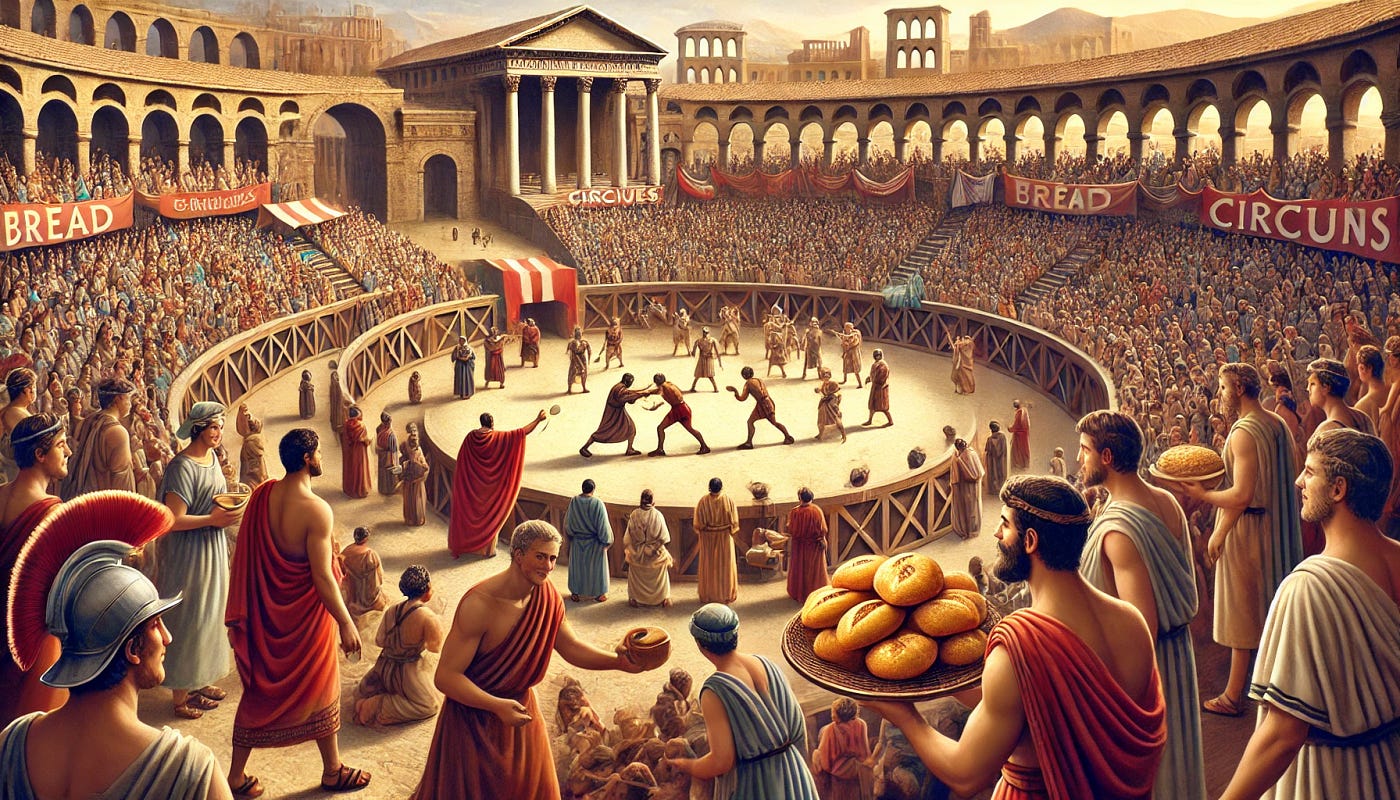
The Roman poet Juvenal noticed this and wrote a sharp line in one of his satires: panem et circenses - “bread and circuses.” What did he mean? Simply put, Juvenal believed that Roman leaders kept the public happy by giving them free grain and exciting entertainment. If people were well-fed and busy cheering at the games, they might not worry too much about who was actually running the government.
In other words, panem et circenses was Rome’s version of “keep them distracted.”
Bread was the first part of the strategy. Rome had a massive population, at times over a million people, and feeding that many citizens was no small task. The government distributed grain through a system called the annona, which provided subsidized or free grain to many Romans. A full stomach makes people calmer, after all. Hungry citizens are more likely to protest.
Then came the circenses - the entertainment.
Rome took entertainment very seriously. The Circus Maximus hosted thrilling chariot races where fans passionately supported their favorite teams, much like modern sports fans. The Colosseum offered gladiator fights, wild animal hunts, and dramatic spectacles that could last all day. Sometimes thousands of spectators filled the stands, cheering loudly as warriors battled in the arena. It was ancient Rome’s version of a giant sports stadium mixed with dramatic theater.
The Roman leaders understood something important about human nature: people love excitement. When emperors sponsored large games or festivals, the public celebrated them. These events could last days or even weeks. The message was clear: the emperor was generous, powerful, and worthy of loyalty.
Meanwhile, political decisions continued behind the scenes.
Juvenal was not amused by this system. In his view, Roman citizens had once been deeply involved in the Republic’s politics. But now, he argued, many people were satisfied as long as they received food and entertainment. In one famous line, he suggests that the public no longer cared about power or responsibility, only panem et circenses. It was a biting criticism of Roman society.
Fast forward a thousand years - the phrase still feels surprisingly modern.
Today, we do not attend gladiator fights (thankfully), but entertainment is everywhere. Sports leagues fill massive stadiums. Streaming platforms release endless shows. Social media provides constant distractions. None of these things is bad on their own, after all, humans have always enjoyed stories, games, and spectacle. But Juvenal’s warning still makes people think. Are we sometimes so entertained that we forget to pay attention to larger issues? Do flashy headlines, celebrity news, or viral trends sometimes pull attention away from important conversations?
Because while we’re busy being entertained, things are happening behind the scenes. Real decisions are being made, quietly. Policies shift, institutions evolve, and systems change while the public watches the next headline, the next trending video, or the next viral controversy. And unlike Rome, there’s no forum where we can gather and demand accountability, not when everyone’s glued to their own private Colosseum.
Juvenal wasn’t wrong. Bread and circuses are powerful. They work. They always have. The question is whether we notice when they’re being used on us. And if we do, whether we care enough to turn off the circus and ask what is really going on in the Senate.