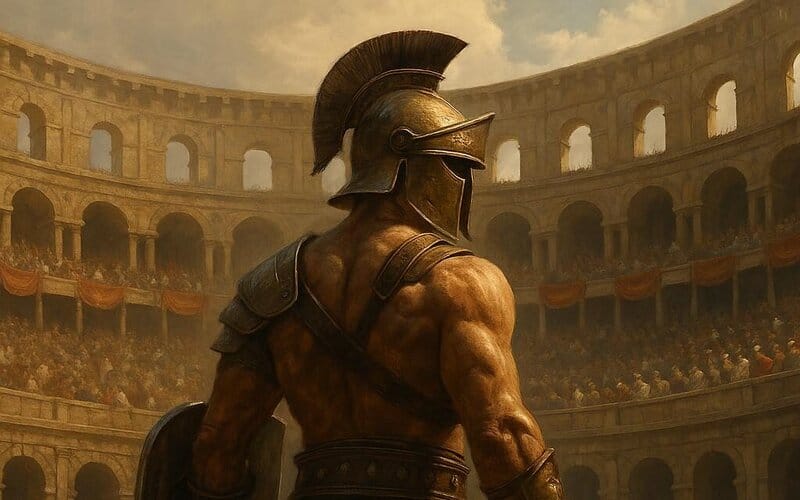
Imagine entering a stadium with 50,000 screaming fans. The crowd is loud, the air smells of dust and sweat, and everyone is waiting for the main event. No, this is not the Super Bowl. It is the Colosseum in ancient Rome, and the athletes about to enter are gladiators.
For Romans, gladiator fights were the ultimate entertainment. They were dramatic, dangerous, and wildly popular. In a world without Netflix, YouTube, or TikTok, watching people fight in an arena was considered a perfectly good way to spend the afternoon.
Gladiators were trained fighters who battled each other or sometimes wild animals in large arenas. The most famous arena was the Colosseum, which could hold tens of thousands of spectators. When the games began, the fighters would enter the arena and salute the emperor with the famous phrase “Ave, Caesar! Morituri te salutant!” - “Hail, Caesar! Those who are about to die salute you.”
Now, despite what movies show, gladiators were not always fighting to the death. In fact, many fights ended when one fighter surrendered. The crowd and the sponsor of the games would then decide the loser’s fate. If the defeated gladiator had fought bravely, the crowd might shout “Mitte!” - “Let him go!” But if the crowd was feeling less generous, things might end badly.
So who were these gladiators?
Most gladiators were enslaved people, prisoners of war, or criminals forced to fight. However, some free men actually volunteered. Yes, you read that correctly. Some Romans willingly signed up to fight in the arena. Why? Because gladiators could become incredibly famous.
Successful gladiators were admired almost like modern celebrities. Their names were known across the city, fans cheered for them, and some even had groupies. Archaeologists have discovered graffiti in Pompeii praising famous fighters. One inscription describes a gladiator as “the delight of all the girls.” Apparently, danger and swords were considered very attractive in ancient Rome.
Gladiators were also highly trained athletes. They lived in special training schools called ludi, where they practiced with wooden weapons, trained under professional instructors, and followed strict diets. Interestingly, many gladiators ate mostly barley and beans. Because of this, they were sometimes jokingly called “hordearii,” meaning “barley men.”
Different types of gladiators fought with different weapons and armor. Some carried large shields and short swords. Others fought with nets and tridents, like the famous retiarius. The variety made the fights more exciting, almost like different weight classes or fighting styles in modern sports.
But the games were about more than entertainment. They were also political. Roman leaders used gladiator shows to win public support. Hosting large games was a way for politicians to show generosity and power. The more spectacular the games, the more the crowd loved the sponsor. In other words, gladiator fights were also a kind of ancient public relations strategy.
At the same time, the games reflected Roman attitudes toward courage and honor. Romans admired bravery, even in enslaved people. A gladiator who fought well and showed courage could earn respect and sometimes even freedom. When a gladiator was finally released, he received a wooden sword called a rudis, symbolizing that he was no longer required to fight.
Still, the games were undeniably brutal. Thousands of animals and many fighters died in arenas across the Roman world. While Romans saw these spectacles as normal entertainment, modern audiences often feel uncomfortable thinking about them.
Yet gladiators continue to fascinate us today. Movies, books, and television still tell their stories. Perhaps it is because gladiators represent something timeless: the human love of drama, competition, and courage under pressure. Or perhaps it is simply the excitement of the arena. After all, when the gates opened and the crowd roared, every Roman spectator knew one thing for certain: Something unforgettable was about to happen.
As the Romans might say, “Fortuna fortes adiuvat” - fortune favors the brave.