Even if you have never taken a Latin class, chances are you already know a few Latin phrases. They pop up everywhere — on school mottos, in books, in movies, and even in everyday conversation. Latin may be an ancient language, but its words still carry powerful ideas. As the Romans might say, verba volant, scripta manent — “spoken words fly away, written words remain.”
Some Latin quotes have survived for more than two thousand years. That is quite impressive for a language people sometimes call “dead.” In reality, Latin is more like a wise grandparent: quiet, old, but full of excellent advice.
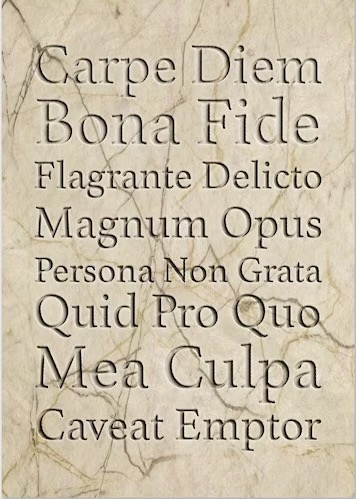
One of the most famous Latin phrases is carpe diem. It comes from the Roman poet Horace and literally means “seize the day.” In modern terms, it is basically Rome’s version of “don’t procrastinate.” Horace was reminding people that life is short, and waiting for the perfect moment is often a mistake. Whether it is starting a project, trying a new activity, or finally studying for that test you have been avoiding, carpe diem still feels very relevant.
Another powerful phrase is alea iacta est — “the die is cast.” According to tradition, Julius Caesar said this in 49 BCE when he crossed the Rubicon River with his army. Crossing that river meant starting a civil war against the Roman Republic. In other words, there was no turning back. Today we use this phrase when a big decision has been made and the outcome can no longer be changed. Once the application is submitted or the message is sent, the die has been cast.
Some Latin quotes offer wisdom about knowledge and learning. One of my favorites is sapere aude, which means “dare to know.” The Roman poet Horace used this phrase to encourage people to think for themselves and seek knowledge bravely. Later philosophers like Immanuel Kant adopted it as a motto of intellectual curiosity. In a world filled with information, and sometimes misinformation, sapere aude might be more important than ever.
The Romans also had a sense of humor about human nature. Consider the phrase errare humanum est — “to err is human.” This quote reminds us that mistakes are a normal part of life. Romans understood something we still struggle with today: nobody is perfect. Whether it is a translation error in Latin class or accidentally sending a message to the wrong group chat, mistakes happen. The important thing is to learn from them.
Another Latin phrase that still resonates today is panem et circenses, meaning “bread and circuses.” The Roman poet Juvenal used it to criticize politicians who distracted citizens with free food and entertainment instead of addressing real political issues. If that sounds familiar, it might be because the idea still applies today. Substitute gladiator games with social media, streaming platforms, or major sporting events, and the concept feels surprisingly modern.
Finally, there is the powerful phrase memento mori — “remember that you must die.” At first glance, this sounds a bit gloomy. But for the Romans, it was meant as a reminder to live wisely and not waste time. Life is temporary, so it should be lived thoughtfully and purposefully. In a strange way, memento mori pairs perfectly with carpe diem: remember that life is short, so make the most of it.
What makes these Latin quotes remarkable is their staying power. The Roman world disappeared long ago, but its ideas still echo through language, philosophy, and culture. Latin phrases are small time capsules carrying ancient wisdom into the modern world.
So the next time you hear someone say carpe diem or memento mori, remember that you are hearing the voice of history. The Romans may be gone, but their words still speak — and sometimes they even offer surprisingly good life advice.
Lingua Latina non mortua est. The Latin language is not dead. It is simply still whispering.