If you hear that someone follows the philosophy of Epicurus, you might imagine a person lounging on a couch surrounded by grapes, pastries, and maybe a never-ending Roman dinner party. After all, the word “epicurean” today often means someone who loves luxury food and fine living. But here’s the twist: Epicurus himself would probably be very confused by this image.
The real Epicurus lived a surprisingly simple life. In fact, his idea of pleasure was not about constant partying or endless indulgence. His philosophy was much calmer - and much more practical.
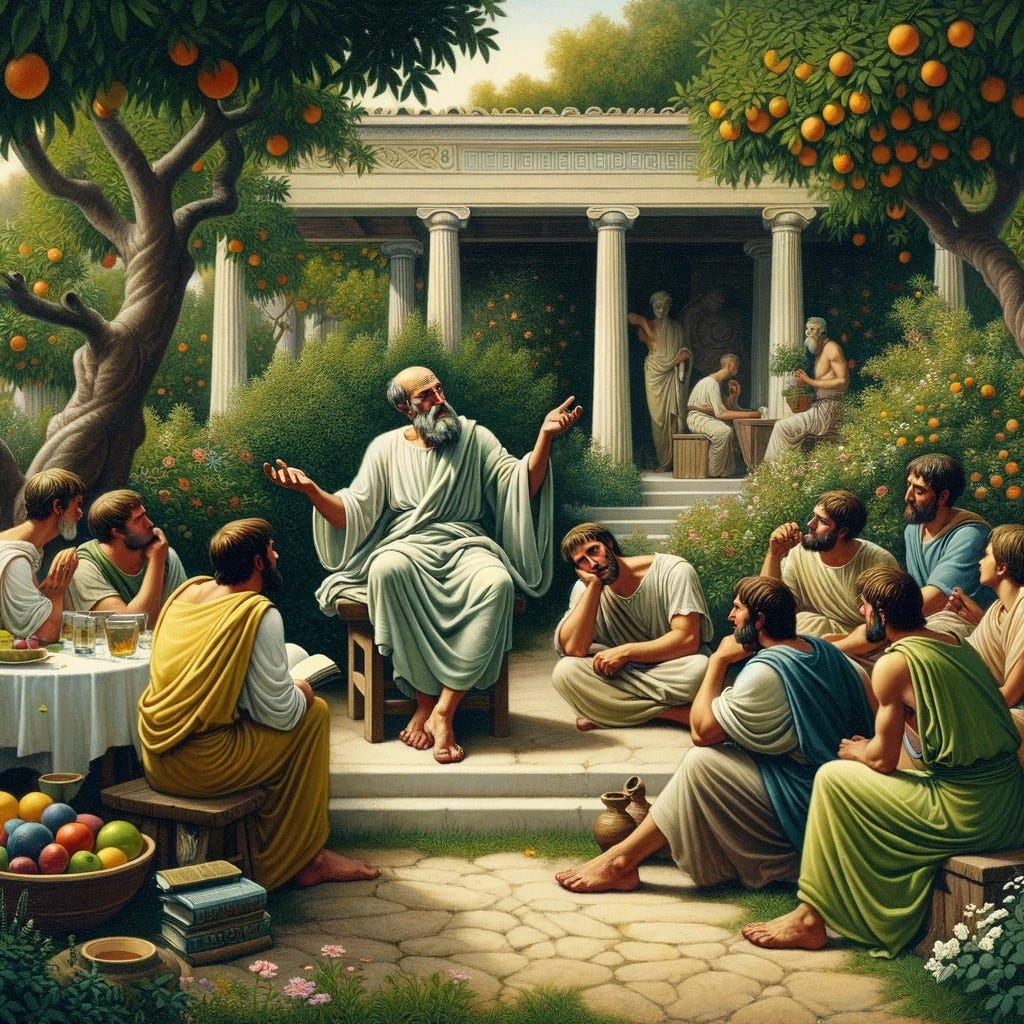
Epicurus was a Greek philosopher who lived from 341 to 270 BCE. He taught his students in a peaceful garden in Athens, which became known simply as “The Garden.” Unlike many schools of philosophy at the time, Epicurus welcomed everyone - men, women, and even enslaved people to study there. That alone made his school unusual.
So what did he actually believe?
Epicurus argued that the goal of life was happiness, or pleasure. In Latin, Romans would later call this summum bonum, meaning “the highest good.” But Epicurus defined pleasure in a very different way from how we often think about it today.
For Epicurus, the greatest pleasure was not excitement or luxury. Instead, it was the absence of pain and worry. Imagine finishing a stressful week of school and finally sitting down with nothing to worry about - no tests, no deadlines, just peace and quiet. That feeling of calm satisfaction is very close to what Epicurus meant by pleasure.
He believed that a peaceful mind and a healthy body were the key ingredients for a good life. In other words, happiness was less about gaining more things and more about removing the things that disturb us - fear, anxiety, and unhealthy desires.
Epicurus even warned people against chasing luxury too much. According to him, constantly wanting expensive food, wealth, or fame only creates more stress. If you need fancy dinners every night to feel happy, life becomes complicated very quickly.
Instead, Epicurus encouraged people to enjoy simple pleasures: good friends, basic food, thoughtful conversation, and a quiet life. Not exactly the lifestyle of a Roman emperor. In fact, Epicurus once joked that if he had a little cheese, he could feast like a king. That is a far cry from endless banquets.
Another important part of Epicurus’s philosophy involved removing fear - especially the fear of death. He claimed that death should not frighten us. His reasoning was simple: when we are alive, death is not present; and when death arrives, we are no longer there to experience it. As he famously argued, nil igitur mors est ad nos - “death is nothing to us.” By removing fear of the gods and fear of death, Epicurus believed people could finally relax and enjoy life.
Ironically, Epicurus’s philosophy was later misunderstood. Some critics accused him of promoting laziness or selfish pleasure. But that interpretation misses the point. Epicurus was not encouraging people to chase every pleasure they could find. In fact, he often recommended self-control and moderation.
A better way to describe Epicurus might be this: he was a philosopher of calm happiness. His ideal life was peaceful, thoughtful, and surrounded by friends. It was not about luxury, but about freedom from worry.
In a modern world full of stress, social media pressure, and constant competition, Epicurus might actually sound surprisingly wise. Instead of chasing endless excitement, he reminds us to enjoy simple things. Or, as the Romans might say, carpe diem - but perhaps with a cup of water, a piece of bread, and a good friend nearby.