In the year 44 BCE, Rome was in chaos. The famous general and politician Julius Caesar had just been assassinated on the floor of the Senate. Senators claimed they had saved the Republic, but what they actually created was confusion, civil war, and a giant political mess.
Into this mess stepped a quiet eighteen-year-old named Octavian.
At first glance, Octavian did not look like someone who would change the course of history. He was young, somewhat sickly, and not nearly as flashy as the generals marching around Rome with their armies. But Octavian had something more useful than muscles: patience and political skill. And he had one very important advantage - Caesar had adopted him in his will.
Suddenly, the teenager was the legal son of the most powerful man in Rome.
Octavian wasted no time using that connection. He arrived in Rome and announced that he would honor Caesar’s legacy. Of course, that also meant honoring Caesar’s supporters - and punishing his enemies. Soon, he formed a powerful alliance with two other leaders: Mark Antony and Marcus Aemilius Lepidus. Together, they created what historians call the Second Triumvirate.
This alliance promised to restore order, but in reality, it launched a brutal campaign against political enemies. Lists of opponents were published, and many were executed. The Roman orator Cicero, famous for his speeches defending the Republic, became one of the victims.
Rome had gone from political debate to political survival.
For a few years, the triumvirs ruled together, but alliances in Roman politics rarely lasted long. Eventually, Octavian and Mark Antony turned against each other. Antony had formed a close relationship with the Egyptian queen Cleopatra, which Octavian cleverly used as propaganda. He told the Roman people that Antony had fallen under the influence of a foreign queen and was betraying Rome.
The rivalry exploded into war.
In 31 BCE, the two sides clashed at the famous naval battle, the Battle of Actium. Octavian’s forces won a decisive victory. Antony and Cleopatra fled to Egypt and later died, leaving Octavian as the undisputed ruler of the Roman world.
Now came the tricky part.
Romans hated kings. Their entire political identity was built on the idea that they had expelled their last king centuries earlier. If Octavian declared himself king, he would probably end up like Caesar - stabbed by senators who felt they were defending liberty.
So Octavian did something clever.
Instead of openly taking power, he pretended to restore the Republic. In 27 BCE, he symbolically returned authority to the Senate. The Senate, grateful and perhaps a little intimidated, promptly handed most of the power right back to him.
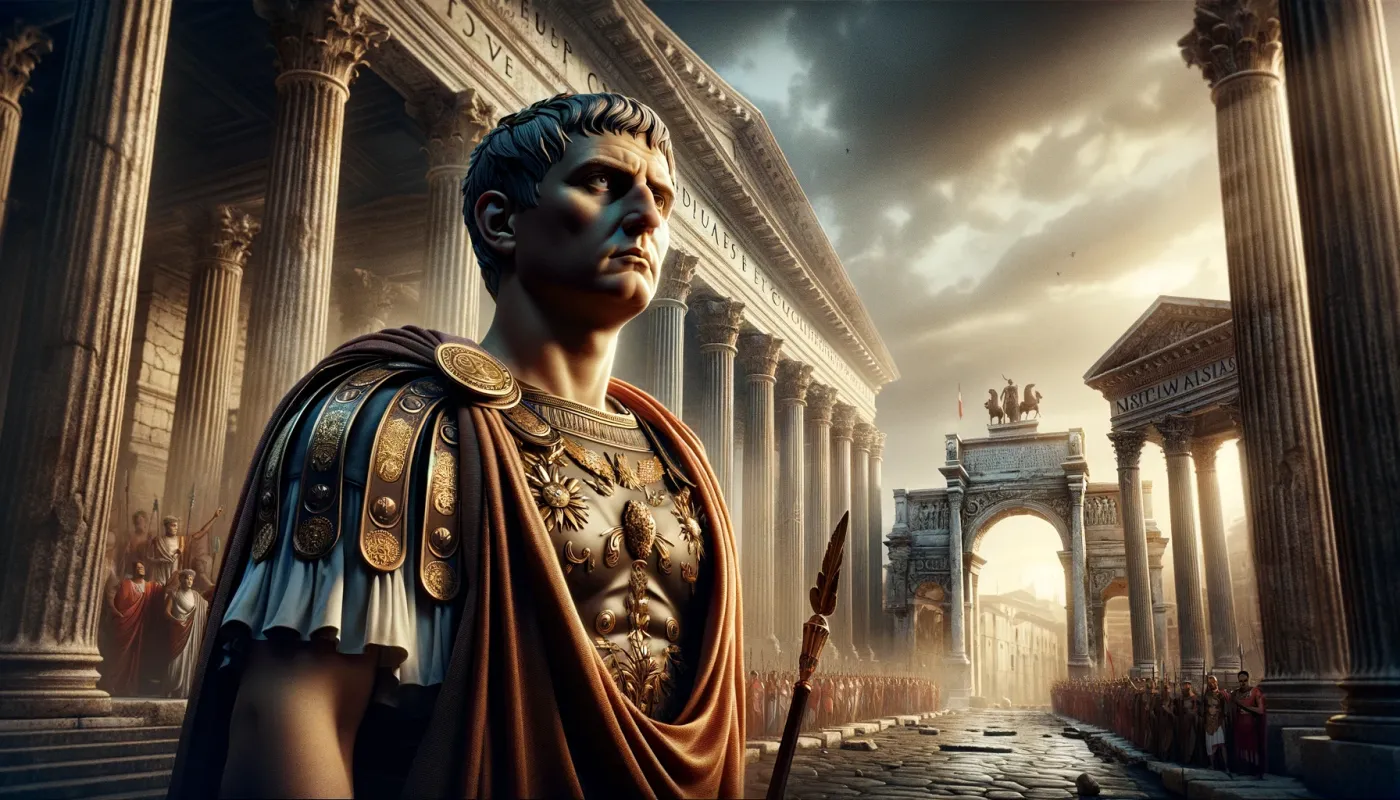
They also gave him a new name: Augustus.
The word Augustus meant something like “the revered one” or “the honored one.” It sounded impressive without sounding like “king.” Augustus preferred to call himself princeps, meaning “first citizen.” Technically, he was just another Roman citizen. In reality, he controlled the army, the government, and the entire empire.
It was political theater at its finest.
Under Augustus, Rome entered a long period of relative peace known as the Pax Romana. Roads expanded across the empire, trade flourished, and the city of Rome was transformed with new temples, forums, and public buildings. Augustus himself famously claimed, urbem latericiam accepi, marmoream reliqui - “I found Rome a city of bricks and left it a city of marble.”
Not bad for a former teenager caught in a civil war.
Augustus ruled for more than forty years, carefully shaping a system where one man held ultimate power while the old Republican institutions still existed on paper. Future emperors would follow his model. In other words, Augustus invented a political system that allowed Rome to have an emperor without officially admitting it.
By the time he died in 14 CE, the Roman Republic was effectively gone. In its place stood something new: the Roman Empire. And it all began with a quiet young man who understood one very Roman rule of politics: festina lente - “make haste slowly.”