If you walked through the streets of Rome around 100 BCE and asked a proud Roman citizen what kind of government they lived under, you would likely hear a confident answer: “Res publica!” — “the public thing.” In other words, the Roman Republic belonged to the people. At least, that was the official story.
But if you looked a little closer, perhaps while standing near the noisy Forum Romanum, you might start to wonder: was the Republic really run by the people, or was it quietly controlled by a small group of powerful elites wearing very expensive togas?
In theory, the Roman Republic was a system designed to prevent any single person from becoming king again. The Romans had thrown out their last king in 509 BCE and were extremely proud of that decision. They believed monarchy was dangerous and even had a phrase to show their hatred of kings: “Rex non sum.” — “I am not a king.”
Instead, Rome created a complex system of checks and balances. Each year, two consuls were elected to lead the government. They commanded armies, oversaw the state, and could veto each other’s decisions. There were also assemblies where citizens voted on laws and elected officials. On paper, it looked impressively democratic.
However, there was a catch.
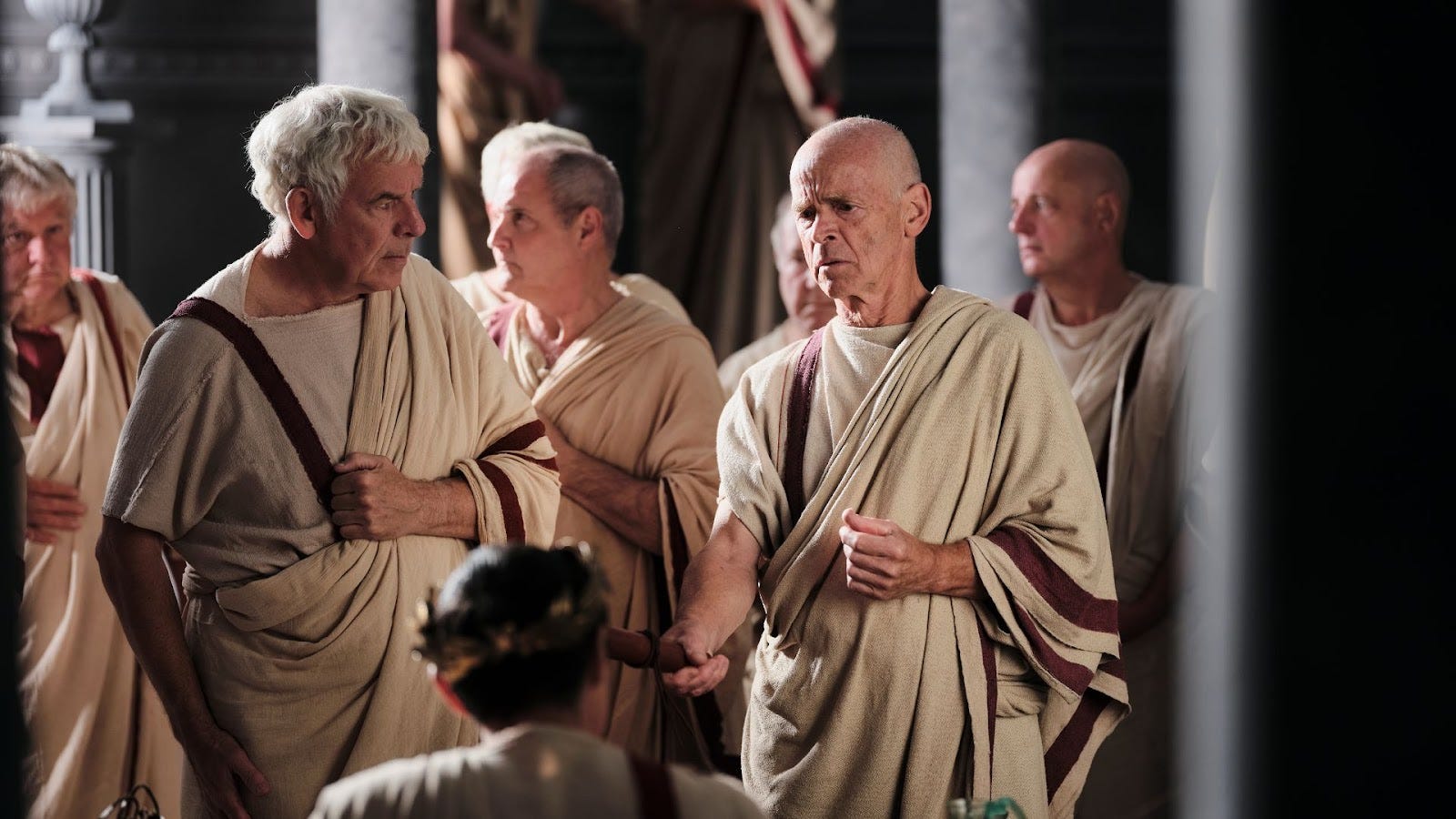
While ordinary citizens could vote, they did not always have much real power. The Roman Senate, which was technically only an advisory council, was filled with wealthy aristocrats from powerful families known as the nobiles. These men controlled politics, finances, and foreign policy. Most senators came from a small circle of elite families who had been dominating Roman politics for generations.
Even elections reflected this imbalance. Campaigning for office in Rome was expensive. Candidates had to host banquets, sponsor games, and greet voters every morning during the traditional salutatio. It was less like a quiet modern election and more like a full-time popularity contest. Naturally, only wealthy Romans could afford to compete. This meant that political offices were usually filled by the rich. A talented but poor citizen might have the right to run for office, but realistically, their chances were about as good as winning a chariot race while walking.
Roman voting itself also favored the wealthy. Citizens were organized into voting groups called centuriae, and these groups voted in a specific order. The richest citizens voted first. If a majority decision was reached early, the lower classes often did not even get a chance to vote. Imagine waiting in line all day to vote, only to hear someone announce, “Thanks everyone, the decision has already been made!” Not exactly the spirit of vox populi—“the voice of the people.”
That said, the Roman Republic was not entirely closed to ordinary citizens. Over time, conflicts between social classes especially between the elite patricii and the common plebes led to reforms. The creation of the Tribuni Plebis (Tribunes of the People) gave ordinary citizens representatives who could veto unfair laws and protect the rights of the common people.
These reforms made the Republic more balanced, but they did not eliminate elite dominance. Political power still tended to concentrate in the hands of a few influential families who knew how to navigate the system. This tension between democratic ideals and elite control shaped much of Roman history. As Rome grew wealthier and more powerful, competition among aristocrats became increasingly fierce. Ambitious leaders like Julius Caesar eventually pushed the limits of the Republican system, arguing that strong leadership was needed to restore stability.
Ironically, the Republic that had once been created to prevent kings ultimately collapsed because powerful individuals gained too much influence within it.
So, was the Roman Republic truly a republic? The answer is: yes and no.
Rome had elections, assemblies, and laws meant to represent the people. But at the same time, political power was heavily concentrated among a wealthy elite. In modern terms, we might say the Roman Republic was a hybrid system: part republic, part oligarchy.
Or, to put it in true Roman style, perhaps the best description is this: “Res publica… sed non omnibus.” — “A republic… but not for everyone.”